
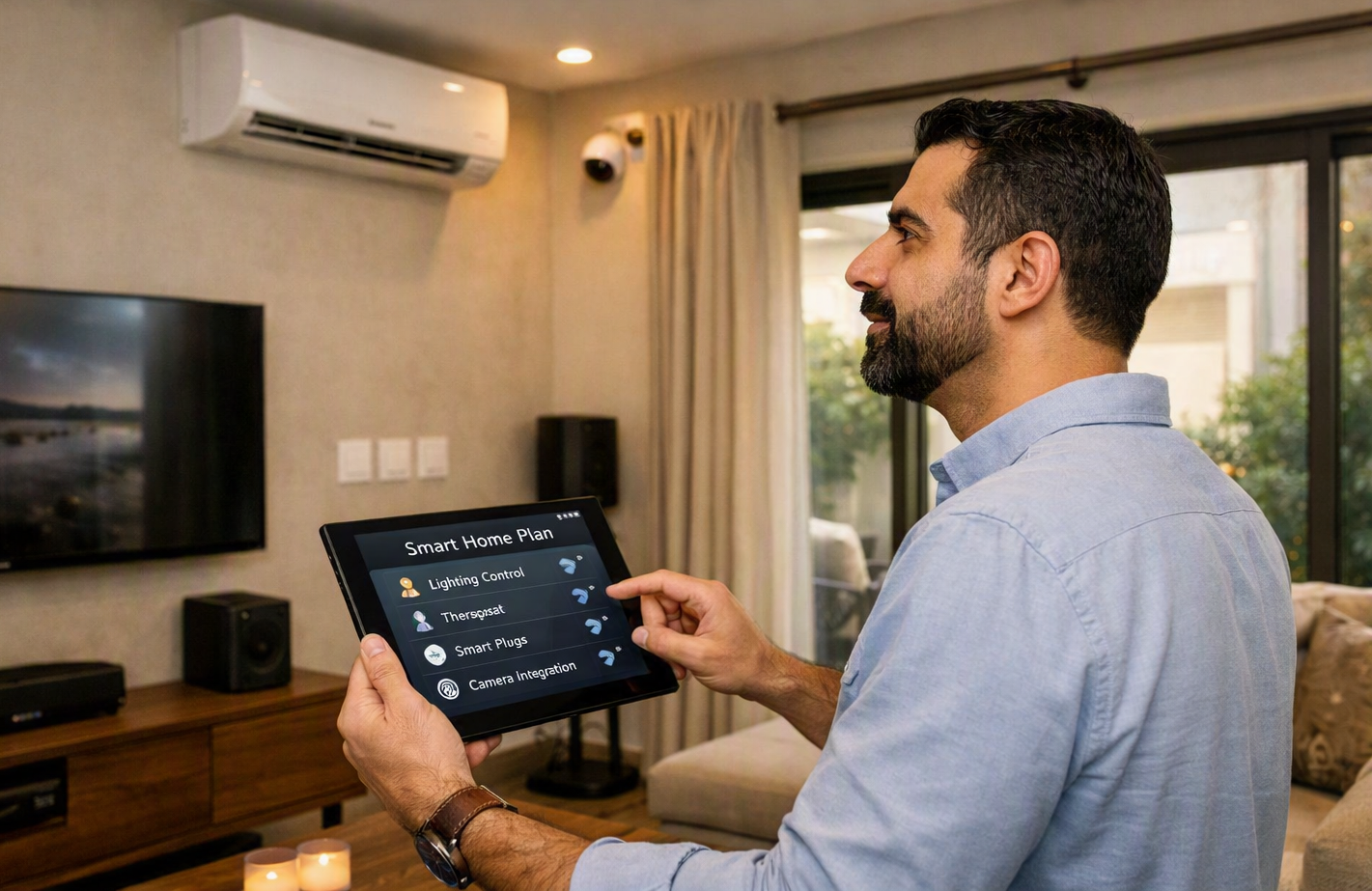
How Can You Plan a Home Automation System Around Your Existing Devices?
Planning a smart home does not always mean replacing everything you already own. Automation companies in Dubai often work with homes that already have lights, air conditioners, TVs, security cameras, speakers, and other devices. The first step is to understand which existing devices can work with a home automation system and which may need additional equipment.
Start With the Devices You Already Have
Before buying new smart products, make a list of the devices in your home. Include lighting, air conditioning, curtains, televisions, door locks, cameras, speakers, and other electrical equipment.
Check the brand and model of each device. Some products may already have smart features, while older devices may need an extra controller or smart switch. This simple check can help you avoid buying equipment that you do not need.
Check Device Compatibility
Not every smart device uses the same technology. Some products connect through Wi-Fi, while others use protocols such as Zigbee, Z-Wave, Bluetooth, or other communication methods.
Compatibility is important because the devices need to communicate with the central control system. If several products use different technologies, a suitable hub or gateway may help connect them.
For example, a smart light may connect directly through Wi-Fi, while a motorized curtain may require a separate control system. Understanding these differences before installation can make the setup easier.
Decide What You Want to Automate
It is useful to decide which daily tasks you want to control automatically. You may want lights to turn on when someone enters a room or the air conditioner to adjust based on a schedule.
You might also want curtains to open in the morning, music to play at a certain time, or outdoor lights to switch on after sunset.
Start with the tasks that are useful in your daily routine. There is no need to automate every device at once. A smaller setup can be expanded later as your needs change.
Consider Your Existing Lighting
Lighting is often one of the easiest areas to include in a home automation plan. If you already have standard lights, smart switches or dimmers may allow you to control them without replacing every bulb.
However, the electrical wiring and type of switches should be checked before making changes. Some lighting systems may need specific switches or control modules.
You should also consider how you normally use each room. Bedroom lighting may need different settings from kitchen or living room lighting.
Work With Existing Air Conditioning
Air conditioning is another important part of a smart home, especially in a hot climate. Some newer air conditioners can connect directly to smart control systems.
Older units may still be usable with an appropriate controller. The goal is to check how the air conditioner receives commands and whether an additional interface can provide smart control.
Schedules can also help reduce unnecessary operation. For example, the system can be set to adjust the temperature during sleeping hours or when the house is normally empty.
Connect Entertainment Devices Carefully
Many homes already have televisions, sound systems, streaming devices, and speakers. Some of these products can be included in a central control setup.
Before changing anything, check which devices support network or remote control. Older equipment may require an infrared controller or another interface.
A well-planned system can make it easier to operate several entertainment devices without creating a complicated setup.
Think About Internet and Network Requirements
A reliable home network is an important part of many automation systems. Smart devices may depend on Wi-Fi or a wired network to communicate with other equipment.
Check the location of your router and the Wi-Fi coverage in different rooms. Large homes, thick walls, and multiple floors can affect wireless signals.
If many devices will be connected, it may also be useful to review the network capacity. A stable connection can help reduce communication problems between devices.
Plan for Future Expansion
A home automation system should not only work with the devices you have today. Think about what you may want to add later.
You might eventually add smart locks, sensors, motorized blinds, cameras, or additional lighting controls. Choosing a system that can support future devices can save time and avoid unnecessary replacement.
It is also helpful to keep records of device models, controllers, wiring changes, and system settings. This information can make future upgrades easier.
Test the System Before Adding More Devices
Once the basic automation is installed, test each function separately. Check whether lights respond correctly, schedules work as expected, and connected devices communicate reliably.
It is better to solve small problems early rather than add many devices to a system that is not working properly. Start with a few useful functions and expand gradually.
Planning around existing equipment can make home automation more practical. By checking compatibility, understanding your current devices, reviewing network needs, and planning for future additions, homeowners can build a system that fits their home instead of starting from scratch. These steps also help Automation companies in Dubai understand which existing equipment can be included in a planned automation setup.







0 Comments